Thursday, April 7, 2011

Rwanda I - Musique Instrumentale - P.1977


Rwanda I - Musique Instrumentale - Instrumentale Muziek
Recordings and documentation by Jos Gansemans
Alpha - 5023 - P.1977


Side A

A1a Cordophones - Inanga - Ibilunga 5'26
A1b Cordophones - Inanga - Impunga 4'49
A1c Cordophones - Iningiti - Urwagwa 3'36
A1d Cordophones - Umuduli -Segitonganya 2'25
A2 Idiophones - Ikembe - Ye baba 5'00


Side B


B1a Aërophones - umwirongi 3'00
B1b Aërophones - insengo 3'15
B1c Aërophones - amakondera 2'32
B1d Aërophones - ihembe 1'58
B2a Membranophones - ingoma (Rubungo) rythme iguhubu 3'04
B2b Membranophones - ingoma (Rubavu) rythmes imilindi, ikilushya, agasiga 6'52
B2c Membranophones - ingoma (Mibilizi) rythme ikimanuka 3'06


There is so little music available from Ruanda that I feel it is my duty to share these with you! I think this series is, if not a very well kept secret, so at least a very precious and rather hidden gem. The recordings that are very well documented (in both French and Flemish) were made in the seventies and are of very good quality both for musical and audio quality. I am going to post the other two volumes the following days and they make very good listening. Personally I think they make more sense if you listen to them in random order but with the accompanying notes nearby in case you get curious and wonder what is going on. I am very happy to share this with you and if you have any more information about the Tervuren catalogue other than in my previous discographic note I hope you will share it with me. Oh, and don't worry, I won't forget about the South East Asia series, there are many more coming soon...


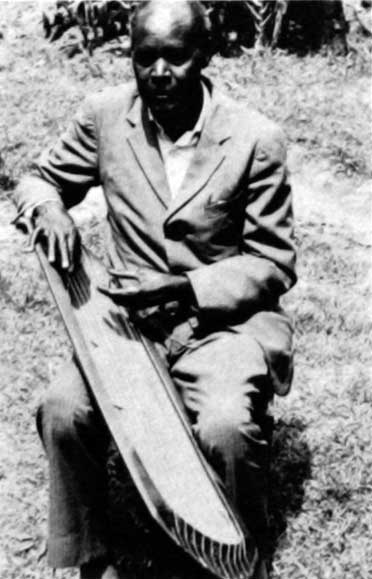
J. Sebatunzi playing the Inanga Zither.

Ikembe Lamellophon

Audience In Rwandan Hills

Amakondera Horn Orchestra


Umuduli Musicbow


Straight Shepherd Flute
Ingoma Drummers


Iningidi Fiddler

Insengo Ensemble From Nkumba


Music ▼ +

Koninklijk Museum voor Midden-Afrika - Tervuren


Koninklijk Museum voor Midden-Afrika

Musee Royal de l'Afrique Centrale
1971 Tervuren


Réf. 680301? - Swazimuziek - Recordings by D. Rycroft - No 1 - P.1968
Réf. 680301? - Luba-Shankadi vocale muziek - Rec. Jos Gansemans - No 2 - P.1969
Réf. 680301? - Zulu, Swazi en Xhosa instrumentale en vocale muziek - No 3 - P.1969
Réf. 680301? - De Teda uit Tibesti - instrumentale muziek - No 4 - P.1971
Réf. 6803015 Ankole West Uganda - No 6 - P.1971
Réf. 6803017 Kongo Music - Music of the Mpangu - No 5 - P.1977
Réf. 6803031 Music of the Bafia - Cameroun - No 7 - P.1977
Réf. 6803038 Yaka Music - Zaïre - No 8 - P.1977
Réf. 6803044 Humbi & Handa - Angola - No 9 - P.1977
Réf. 6803054 Musique de Luanda in Zaïre - No 10 - P.1977
Réf. 6803073 Musique de Tchokwe in Zaïre - No 11 - P.1977


Alpha 5023 Rwanda 1 - Musique Instrumentale - P.1977
Alpha 5024 Rwanda 2 - Musique Vocale - P.1977
Alpha 5025 Rwanda 3 - Musique de Danse - P.1977

Thanks for the kind help extended by "whiteink" that now allows us also to know what the first four volumes were. Those I have no copy of, but if someone has them and could supply digital likeness of the audio and photos of the sleeves and labels and accompanying booklets ;-)
I am sure that all Luobaniyans would be overjoyed. I had checked the museum homepages but failed finding the RMCA series. I would be very happy if someone still has more information about any other series like the Alpha Label. But I have not even looked carefully at the Museum homepage yet, so maybe they are right under my nose. I'll let you know. But if you know if there were any publications on LP or cassette either in other own produced series or a continuation on the Alpha label or other label of African field recordings you'll let us know right!

All the volumes listed above (minus the first four!) will be posted here as soon as I find time! Most are almost ready and the vol 1-3 of Rwanda will soon start appearing here. But the volumes 6-11 all include a 50 - 80 pages book with the "liner notes" (actually more like field research reports) in french, flemish german and english and they take considerably longer time to edit. If you can contribute any other recordings from this series and that are not listed here please let me know and I will post them here with your kind help. Or you make them available somewhere we can reach them!

Wednesday, April 6, 2011

Kottur Rajarathinam Pillai - Karnatic Classical


Kottur Rajarathinam Pillai & Haridwaramangalam, A.K. Palanivel
- Karnatic Classical - Nadaswaram & Thavil
Sangheta - 33PIX 1051 - P.1980


Side A

A1 Terateeyagarada - Gowlipanthu - Adi - Thyagaraja
A2 Sarasakshaparipalaya - Panthuvarali - Adi - Swathi Thirunal
A3 Nee Bhakthi Bagyasudha - Jayamanohari - Rupakam - Thyagaraja

Side B

B1 Nadachi nadachi - Kharaharapriya - Adi - Thyagaraja
B2 Janakiramana - Sudhaseemanthini - Adi - Thyagaraja
B3 Nagumomu - Madhyamavathi - Adi


Kottur Rajarathinam Pillai, Nadaswaram
Veeraswamy Pilai, Nadaswaram
Haridwaramangalam, A.K. Palanivel, Thavil
Thanjavur Govindaraj, Thavil


Short notes on the artists from the back of the sleeve:

Sri Kottur N. Rajarathinam learnt the art of the Nadaswaram under his grandfather, Kottur S. Sowndera Raju. Later he developed the art under Tiruvidaimarudur P.S. Veerasamy Pillai. A very popular artist in Nadaswaram, Sri Rajarathinam has many titles to his credit.

Sri Haridwaramangalam A.K. Palanivel learnt thavil, a percussion instrument under his father Kumaravel Pillai. Later, he was a disciple of Tirucherai T.G. Muthukumaraswamy Pillai. He has many titles to his credit. He made a performance tour in USA and Canada for two months and has visited Srilanka on several occasions.


Tuesday, April 5, 2011

The Angkola People of Sumatra - Rec. 1971-79


The Angkola People of Sumatra
- An Anthology of South-East Asian Music
Recordings by Margaret J. & H. Kartomi - 1971-79
Musicaphon • Bärenreiter - BM 30 SL 2568 - P.1983


Side A

No. 1 Gordang Irama Rangas Na Ule-Ule 2'27
No. 2 Gordang Irama Harajaon, dengan 4'36
- (with) Irama Onang-Onang dan (and) Irama Jeir-Jeir
No. 3 Gordang Irama Aek Magodang 2'23
No. 4 Gordang Irama Sihutur Sanggul 2'01
No. 5 Gambang Mandangkit Ko Somanikitik Kami 1'12
No. 6 Tulila Solo 0'34
No. 7 Gordang Irama Udan Potir 1'59
No. 8 Gordang Irama Tua 3'25
No. 9 Gordang Irama Roba Na Mosok 1'18
No. 10 Ungut-Ungut - Sikambang Angola 3'03


Side B


No. 11 Sitogol Angkola and Mandailing with ole-ole 5'02
No. 12 Gondang Irama Onang-Onang dan (and) Ile-Ile Naposo Bulung 4'56
No. 13 Gondang Irama Onang-Onang Inanta Soripada 1'54
No. 14 Zikir-rapano Toko Dua 2'52
No. 15 Zikir-rapano Toko Pinis 4'07
No. 16 Gondang Irama Campong-campong 2'08


Here is the second record I have chosen to post from this series. There will be thirteen more coming during the following weeks. For an interesting review of this record see the accompanying text of my previous post!


Muslim Men performing zikir-rapano in Wele I.

The men sing Muslim poetry, accompanying themselves on frame drums.


Girls in Sabadolok performs nasit,
accompanying their singing on frame drums.


A gambang played by two women outside their house in Bahal I, Portibi.


Dancers portrayed iconographically on a temple at Portibi, Patang Lawas.


Monday, April 4, 2011

The Mandailing People of Sumatra - Rec. 1971-79


The Mandailing People of Sumatra
- An Anthology of South-East Asian Music
Recordings by Margaret J. & H. Kartomi - 1971-79
Musicaphon • Bärenreiter - BM 30 SL 2567 - P.1983


Side A


No. 1 Gondang Irama Poncak Kutindik 3'11
No. 2 Gondang Irama Poncak Kutindik 1'34
No. 3 Gondang Irama Jolo-jolo Turun 1'23
No. 4 Gondang Irama Ideng-ideng 1'19
No. 5 Gondang Irama Alap-alap Tondi 2'54
No. 6 Gondang Irama Raja-raja 4'07
No. 7 Gondang Irama Tua 2'27
No. 8 Gondang Irama Mandailing 3'01
No. 9 Gondang Irama Sampedang 3'01
No. 10 Gondang Irama Porang 1'35


Side B


No. 11 Momongan Irama Poncak 1'22
No. 12 Momongan Irama Mandailing 0'56
No. 13 Momongan Irama Raja-Raja 0'36
No. 14 Gordang Sembilan Irama Sarama Datu 2'15
No. 15 Gordang Sembilan Irama Pamilihon 1'50
No. 16 Gordang Sembilan Irama Mandailing 2'17
No. 17 Suling Solo 1'12
No. 18 Sordam Solo 1'31
No. 19 Sarune Solo 1'26
No. 20 Salung Solo
No. 21 Gondang Buluh Irama Poncak 1'02
No. 22 Gondang Buluh Irama Mandailing 2'41
No. 23 Gordang Lima Irama Sampuara Batu Magalang 3'12
No. 24 Gondang Irama Roto 1'20
No. 25 Mangandung Hamatian 1'54


It is really high time to start posting this series if we are going to be prepared for sun and hotter climate before summer. I really like the drive and good feeling of this village music. It gives me a feeling of a healthy culture with good and sound traditions. a feeling of people getting along and allows for a more potential daydreaming of belonging and shared joy.

This is the first I post from the Mandailing people from Sumatra, I'll post an other one soon of the Angkole people that are their neighbours and have close traditions. I think they are a good pair to start with. I will post the others in no particular order but hopefully we shall get all 16 of this Anthology of South East Asian Music to appear here in due time!


A Lubus-clan sopo godang pavillion in Pakantan


A Gondang Buluh
a bamboo percussion zither


Raja Decendant Dancing in Yellow Robe


A shaman and his assistent in a state of trance, in Wele.


A gondang buluh ensemble in Medan


A gondang ensemble in Tamiang

A gordang lima ensemble in Medan Gunung Kulabu group.


A review by Artur Simon of this, and the other volume that I am about to post from the same series.


The Mandailing People of Sumatra. Recordings and commentary by Margaret Kartomi. One 12" 33 rpm disc. An Anthology of South-East Asian Music, published by the Institute for Musicology of the University of Basle. Barenreiter. Musicaphon BM 30 SL 2567. Commentary in English and German, 14 p., photos, drawings.

The Angkola People of Sumatra. Recordings and commentary by Margaret Kartomi. One 12" 33 rpm disc. An Anthology of South-East Asian music, published by the Institute for Musicology, Basle. Barenreiter Musicaphon BM 30 SL 2568. Commentary in English and German, 10 p., photos, drawings.

The Batak peoples of North Sumatra (Angkola/Mandailing, Karo, Pakpak, Simalungun, Toba) have only recently aroused the interest of ethnomusicologists. Some field work has been carried out, and the results published here and there. These two records are the first publications of traditional Angkola/Mandailing music on record and a good supplement to earlier articles about the same subject published by Margaret Kartomi. The recordings were made on several field trips between 1971 and 1979. They represent a good cross-section of the most important music genres and ensembles, such as the gordang sembilan (the gordang with nine drums), the gordang lima (the gordang with five drums), the gondang dua-dua (with two
drums), as well as music played on wind instruments, tube zithers (gondang buluh) beaten with sticks, and a xylophone called gambang. Two recordings (Angkola record bands 14 and 15) with zikr-rapano music accompanied by frame drums, show the Islamic influence within this music culture.

While Kartomi distinguishes between Angkola and Mandailing by publishing their music separately on two records most scholars make no clear distinction between the two cultures. This is underlined by Kartomi in the commentary of the Angkola record: ". . .the culture and language of both peoples are so similar that the distinctions between them mean little in terms
of the practical aspects of daily living. Their traditional musical instruments and ensembles, as well as the uses and functions of the music, are similar in both areas. But some items of repertoire, titles of pieces and songs, and some aspects of musical style differ." Indeed, the author intended to publish the material as a 2-disc-in-one-album; but the editor, following the
guidelines of the generally well-made Anthology of South East Asian Music and of the record company itself, converted the double album into two separate discs. This was probably the reason for some of the resulting confusion. A lower Mandailing group of gondang and gordang musicians of Wele I, Padang Sidempuan, is not found on the Mandailing record, although it is mentioned in the commentary. Nine recordings were made in Pakanta, a village in Upper Mandailing, and twelve in Medan, the capital of Sumatera Utara with musicians from Pakantan. On the Angkola record we find 13 recordings from Batunadua, one from Desa Bahal I, a small village at the temple sites of Padang Lawas, and two designated as Wele I, Batunadua. In the latter case, it is not evident whether Wele I (Padang Sidempuan) or Batunadua is meant. Five photos and drawings out of eleven to twelve on each record can be found on both records. For the sake of the documentary value it would have been better to have different pictures on each record sleeve. Much space has also been wasted by printing the same musical transcriptions twice, side by side in both the English and the German texts.

The Mandailing record begins with two gordang sembilan pieces which serve as accompaniment for the art of self-defense @oncak) performed by two men or boys (see illustration 9 of the Angkola record). As is generally done on both records, the musical analysis is supported and supplemented by notations of the basic rhythm patterns played on drums and gongs, and of the approximate scale of the sarune (oboe). The beginnings of the second and third piece are transcribed in a score-like notation. The drumming of the nine drums of the gordang sembilan can be characterized as a combination of individual rhythmic patterns that produces the resultant basic rhythms. In order to show this the transcriptions are helpful to a certain extent, although I doubt that the dense interlocking polyrhythmic structure of the nine drums played by five musicians can be shown clearly in a musical notation like that provided for Band 2.

Most of the following pieces belong to the repertoire of the gondang boru or gondang dua-dua ensemble. Several titles of pieces like "jolo-jolo turun" ("calling for the spirits to come down") show the strong relations of this music with the old (i.e., pre-Islamic) religious ceremonies and beliefs of the Bataks. The title of Band 4," gondang ideng-ideng," does not mean "praying that the spirits settle in" but suggests a lullaby ("to rock a baby") when played at the celebration after the birth of a child. "Gondang alapalap tondi" Band 5) means "gondang for calling or fetching back the tondi" tondi = "soul" or "vital power," which has to be reunited with the
sick person at curing ceremonies). An interesting example of the pre-Islamic tradition is Band 25, mangundung hamatian, a lamentation called andung which can still be found among Christianized and non-converted Bataks. Rhythmic patterns of the momongan gongs are demonstrated in three analytical recordings (Bands 11 to 13) followed by three other gordang sembilan examples (Bands 14 to 16). The suling of no. 17 is not a side-blown flute but an end-blown one as correctly noted in the German text. The solo of Band 18 is played on a free reed instrument (in German: Durchschlagzungeninstrument) and not on an end-blown flute. A similar piece was recorded seven years later by the reviewer when working with the same group of musicians.

As for the recording of the tube zither groups (gondang buluh), it might be added here that these instruments serve musically as a substitute for drums and gongs (cf. Simon 1985: 139). The low sounding "boru gong" can be clearly distinguished on Band 22 when played on the zither's low string, called "boru-boru" (female/mother).

The Angkola recordings, especially those of the ensemble music, seem to have better sound balance than those of the Mandailing record. Most of the recordings were made with a Nagra IV-L mono tape recorder but, unfortunately, at 9.5 cm/sec (3.75 i.p.s.) instead of 19 cm/sec. Eight recordings of the Mandailing record were made with a Nakamichi stereo 500 cassette recorder, and Band 3 (Mandailing) was recorded by Dr. David Goldsworthy with a Tandberg 11 mono tape recorder. There is a great discrepancy in the sound balance between the wind and percussion instruments in the large Mandailing and Pakpak ensembles. The wind instruments are too weak to hold up against the sound cascades of drums and gongs. It seems as if they were introduced into these groups for more or less non-musical reasons. When standing some meters away from the group it is nearly impossible to hear any wind instrument. It is therefore difficult to record this music without manipulating its "natural" sound balance. For scientific purposes, however, one would prefer a stronger recording of the melody on the wind
instrument. The recordings on these records come closer to the natural balance, with a nearly inaudible sarune (cf. Mandailing Band 3).
Another wind instrument is the saleot (Angkola Band 2, and perhaps Band 6). It is defined as double reed in the commentary, while the drawing (ill. 8) seems to show it with one rice stalk reed. The only instrument played by women is the xylophone gambang (Angkola Band 5). However, this instrument seems to play a more marginal role within the traditional music of
today.

The recordings and commentary have great documentary value because they allow us a first glance at a hitherto unknown music. Both are an excellent introduction into this important music culture of the Indonesian archipelago. The ethnographic notes of the commentary indicate the socio-religious role that gondang music had in pre-Islamic times. Considering the fact that this tradition is on its way to becoming a mere onstage folklore performance or a kind of revival activity (like the groups in Medan and Padang Sidempuan) this edition should be appreciated and recommended to all who look for profound information about the musics of South East Asia.

Department of Ethnomusicology Artur Simon
Museum of Ethnography
Berlin (West)
Reference

Simon, Artur 1985 The terminology of Batak instrumental music in Northern Sumatra. Yearbook for
Traditional Music Vol. 17: 113-145.
from
Ethnomusicology No 30 vol 3 (Autumn, 1986), pp. 543-546



Sunday, April 3, 2011

The Madurai Brothers - Nadhaswaram


M.P.N. Sethuraman & M.P.N. Ponnuswamy (Madurai Bros.,)
- Nadhaswaram
AVM Music Service - AVM 1000351 - N.D.


Side A

A1 Mangayarkarasi - Bhoopalam - Adhi
A2 Manasuloni - Hindolam - Adhi
A3 Oh Rama Nee Nama - Poorvikalyani - Adhi


Side B

B1 Thani Avarthanam - Thavul - Adhi
B2 Ennakavi Padanalum - Neelamani - Adhi
B3 Ye vaky Seetha Jawali - Kapi - Eka thalami

Special Thavul:
Haridhwaramangalam Pazhanivel
Thiruvalaputhoor Kaliyamoorthy


Apart from "What fantastic music, and what a breathtaking Thani Avarthanam on the B-side", I can only add, "What a cover!"


Saturday, April 2, 2011

Flute & Gamelan of West Java - Recordings by Mike Steyn


Flute & Gamelan of West Java
- Recordings by Mike Steyn
Tangent - TGS 137 - P.1978

Girl Dancers at the Court of Bantem as seen by an eyewitness 1596.

Map of Java


Kenong Gong Chimes
(It does not say so anywhere, but I assume that this is Mike Steyn himself.)

Michael Eugene Steyn, record producer: born Cape Town 23 July 1931, died London 3 January 1999.

Mike Steyn played an unusual part in the musical life of this country, particularly in the folk revival of the Sixties and Seventies.

While other record companies and producers responded to public interest by promoting the forgotten or neglected treasures of Anglo-American folk music, Steyn went beyond the confines of the West, to Africa and Asia. He launched a number of outstanding musicians and singers, some celebrated in their own countries but unknown in Britain, others new and obscure, and launched their international careers. Their music inspired and influenced musicians and singer-songwriters as diverse as Paul Simon and Peter Gabriel, and bands such as Genesis and Fairport Convention.

A fine musician himself, with an unerring ear for tone and colour, Steyn sensed the potential of artists on first hearing them. His high musical standards and his unusual disregard for commercial gain made Tangent Records, the company he started in the late Sixties, a badge of quality. He distributed his productions world-wide through record companies with aims and reputations similar to his own, among them the distinguished Harmonia Mundi in France and Lyrichord in the United States. As a result many of his recordings have endured and become classics of the genre.

Born in South Africa, Steyn showed a precocious aptitude for music. He was virtually self-taught until a bursary brought him to England to study composition and conducting at the Guildhall School of Music, where he was spotted as potentially a star conductor. Among his contemporaries was Jacqueline Dupre, whom he conducted playing Elgar's Cello Concerto with the Guildhall Orchestra. His energy and passionate love of music inspired the members of the orchestra and won him a second grant to continue his studies for a further two years.

Tangent's first three records were of Ethiopian folk music, recorded in Ethiopia by the late Jean Jenkins, then the Curator of Music at the Horniman Museum. Other recordings followed, and in 1976 he released a box of six LPs of music from all over the Islamic world, to coincide with the World of Islam Festival in London - it is now a collectors' item. There followed seven records of Scottish music with Edinburgh University, three LPs with Mustafa Tettiy-Addy, the Ghanaian drummer and one of Africa's best-loved musicians, and many more - some 120 recordings of music from all over the world.

When he sensed that his job was done, he left to return to classical music and composition, handing over Tangent's distribution to Topic Records, one of Britain's oldest and best folk labels. Unfortunately he also discovered he had cancer. He devoted the same single-minded effort he had deployed in his work to combat his illness, and succeeded in winning long periods of remission - he was given six months by his doctors and lived six years.
From the obituary in The Independent by Shusha Guppy


Side A


A1 Mupu Kembang 5'10
A2 Catrik 5'01
A3 Sinyur 4'52
A4 Manintin 4'40


Side B


B1 Srimpi Jakarta 6'15
B2 Bendrong 5'40
B3 Jipang 3'12
B4 Putri 6'10
B5 Renggong Buyut 1'59


Well I was thinking that we need a little change of climate. Here it was snowing and raining and very grey again and I got a bit low...
But when I heard some very nice music from Madagascar recently posted on Luckys blog (you'll find the links in the sidebar) I felt the sun coming back and I was feeling much better so I started thinking about other climate changers and this record definitely is one. It is also very mellow and most refined, and especially the first side, even if I have started to get more and more sensitive to flutes, this Suling is not at all shrill and most soothing to my ears. Hope you enjoy this music as much as I do and that the warmth emanating from it will thaw also you from the frosty winter that refuses to leave. Well just in case if you are in need of that, otherwise I am sure the music also has beneficiary qualities on many other levels.


Kendang drums and Kemanac finger cymbals


Large and medium Gong.

Saron metallophone

Sulaeman the Suling flute master.

Yuyu Kangkang - the river crab.


Friday, April 1, 2011

The Madurai Brothers - Nadhaswaram 1978


M.P.N. Sethuraman & M.P.N. Ponnuswamy - Nadhaswaram
EMI Columbia - S-33 ESX 6160 - P.1978


Side A

A1 Adamodi — Charukesi 5'19
A2 Sri Kanthimathi — Hemavathi 18'12


Side B


B1 Rarama Intika - Asaveri 3'45
B2 Kalyanamelam 7'26
B3 Pasuram 6'37
B4 Chinnanchiru Penpola 4'26

Valyapatti A.R. Subrahmanyam, Thavil


To somewhat alleviate the flagrant lack of Nagaswaram music posted on this blog I feel obliged to post another great record by The Madurai Brothers. There is also some miraculous Thavil to be heard here by the master drummer Valyapatti A.R. Subrahmanyam.