Thursday, April 14, 2011

2ème Festival Algerien de la Musique Andalouse 1969 Volume 1:4


2ème Festival Algerien de la Musique Andalouse 1969 Volume 1 [4 of 6]

Musique Classique Arabe -
Maroc-Libye-Le Caire-Tunisie-Turquie
Alger • Constantine • Tlemcen

Label: Mehradjane RTA Production
Production de la Radiodiffusion Television Algerienne


Disque 4


Side A  [Matrix No - RTA 4 LPL 4815 380]


El Haoua el Djamil 
(Tlemcen) Direction Ahmed Mellouk

Nouba Rasd Eddil

Touchia
M'Cedder - Châârek min djanah eddhalam
Ensraf - Kad Dharrani el Haoua
Khlass - Lakaytouha fi ettawafi tassaâ


Side B  [Matrix No - RTA 4 LPL 4816 380]

Ensemble de Blida 
Direction El Hadj Medjber 
- chanteurs Mohamed Benguergoura, Dahmane Ben Achour


Mohamed Benguergoura

Betaïhi Ghrib - Amla Kououss el Khilaâ


Dahmane Ben Achour


Istikhbar Zidane 
Derdj raml - Lach Toufakir
Ensraf - Bi abi man zara Laylan


We have at last reached the fourth LP and to me this record is the best in the box and mostly really because of the B-side! The ensemble El Haoua el Djamil led by Ahmed Mellouk on the A side with the Nouba Rasd Eddil a beautiful piece of music and is evidently very good. It is a beautiful rendition that stands on its on merits but for me the flip side gets much more playtime.


This fourth disc from the box, is the one where Mohamed Benguergoura and Dahmane Ben Achour accompanied by the Ensemble de Blida under the direction of El Hadj Medjber appears in all subtle splendor! Mohammed Benguergoura is one of the old masters, father of the maybe ironically better remembered son Mustapha Benguergoura also a very good musician but not of the same stature. I would like more information about him and if anyone knows of any other recordings with him please let me know. It is a short but beautiful piece and in one short passage you can also here them singing the refrain in unison! I could listen for hours to his wonderful voice. But it gets even better, the next track on the B-side, and also the longer one, has Dahmane Ben Achour singing in full splendour! His torn yet smooth voice soothing and hovering with a withheld glow but with a constant passion that can draw flames from totally consumed cinders, it always moves me deeply and kindles my flame for hopeless passion. "The only true and pure love is the unrequited love. the only true believer is he that is of continued faith without any hard proof". The Sufi sentiments of loosing oneself submersed in love, runs deep in these musical passages.


Ahmed Mellouk

Sheikh Ahmed Mellouk was born the 3rd of August in 1931, in the densely populated neighborhood of El Qorrane in the old medina of Tlemcen. At nine years he was already an orphan, and from a young age, he learned to play the "fhel" (a kind of flute) and the"guimbri "(a stringed instrument made of a turtle shell) which he played brilliantly. At 12, he sang beautifully and mastered all sorts of other musical instruments. In 1959 he founded the association "El Hawa el Jamil", so named with a reference to a Qacida composed to him by Dr. Mohamed El Cherrak Ghosli that he adopted as prelude music but probably also from the name of the neighbourhood were the old radio station in Tlemcen that he frequented regularly for "live recordings"were located.

He participated in many festivals, and obtained several remarkable prices, particularly in Algiers where he received first prize at the International Music Festival "Sana" in 1967. He was so much more than a conductor, Sheikh Ahmed Mellouk was actually a man of many hats in his orchestra, combining the various titles of singer (moutrib), "Lombard" (zernadji), lyricist (cha'ir), composer (moulahine) luthier (maker of musical instruments), muezzin (mouadhine) ... Something that also shows in his family which in itself almost have the full setting of an orchestra, through his sons Nasreddine (mandolin), Talib (mandolin), Abderrahim (violin), Abdelouahab (banjo), Sid Ahmed (keyboard and zorna) and through his two brothers Mohamed (nayati) and Habib (lute) in addition to his grand-son Imad (percussion) ... 
He was the victim of a bomb in 1997 but as inforrmation about him is very hard to find it is virtually impossible for me to find out if he survived or passed away. Very few traces are left of him even though he is mentioned with great respect whenever he is mentioned.


 (my searches reveal nothing, maybe you can help)
El Hadj Medjber (Blida N.D?)


Mohamed Benguergoura (to the right, sitting)
Dahmane Ben Achour (to the left sitting with the Oud) 


It is really hard to find any information about Mohamed Benguergoura. 
All I know, is that his son Mustapha Benguergoura and his grandson (no name?) 
and grandgrandson Sid-ali who plays the violin, all are playing Hawzi, Malouf and Saana in Blida. 


Dahmane Ben Achour (1912 -1976)

Dahmane Ben Achour musician and singer whose real name was Achour Abderrahmane, born on the 11th of march 1912 in Ouled Yaïch (Blida). Having lived a long part of his life in Alger he died in 15th of September 1976 back in Blida , after an astounding career as a well renowned singer, having started out as with his father as a barber occationally singing for weddings, he gradually rose to fame and became professional. There is more music to be found by him at this blog in a previous post where you can also listen to a live version of Noubat Elh'sine, one of the pieces that together with the Noubat Ezzidane: Ellouzou Fatheh are some of his very best! It does not have all the intensity of Ellouzou Fatheh but it will give you an idea. His rhythmically unbound pieces are my favourite, but it does not matter much what he sings, as he always touches me and makes me feel, that at least I did not waste my life totally, I got to listen to Dahmane Ben Achour, who originally worked as a barber, but rightly became a celebrated singer with his own weekly concert slot on the young Algerian TV!

If you like to compare the singing styles of Mohammed Benguergoura and Dahmane Ben Achour you can listen to a very good clip of the very same song that appears on this record, the "Amlâ ku’ûs al-khilâ‘a" but this time sung instead by Dahmane Ben Achour! Listen here


Wednesday, April 13, 2011

2ème Festival Algerien de la Musique Andalouse 1969 Volume 1:3


2ème Festival Algerien de la Musique Andalouse 1969 Volume 1 [3 of 6]

Musique Classique Arabe -
Maroc-Libye-Le Caire-Tunisie-Turquie
Alger • Constantine • Tlemcen

Label: Mehradjane RTA Production
Production de la Radiodiffusion Television Algerienne


Disque 3


Side A  [Matrix No - RTA 3 LPL 4813 380]

El Fenn Ouel Adeb (Alger) 
(Direction Mustapha Boutriche)

Nouba Rasd eddil

M'Cedder - El Djamal fattane
Ensraf - Billah ya nassim essaba
Khlass - Niranou Kalbi 


Side B  [Matrix No - RTA 3 LPL 4814 380]


Ensemble Annaba  
(Direction Hassan el Annabi)

Nouba Raml


We continue with some more of the good! Here comes the third disc from the box!

The A side with the Nouba Rasd Eddil is conducted by Mustapha Boutriche who later became a professor of Andalusian music at the Conservatory of Algiers, led the ensemble El Fenn Ouel Adeb that he cofounded with Hassen Benchoubane, until his death in the early 2000 was superseeded by his brother Mohamed Boutrich also he a professor of Andalusian music at the Conservatory of Algiers who passed away in the month of May now almost two years ago. 

Especially listen to the B-side with Hassan el Annabi (real name Hassan Aouchel) who later also had a festival named after him in Annaba!


Hassan el Annabi (Hassan Aouchel)

Hassan el Annabi musician and singer born November 20, 1925 in El Kseur (Bejaia) he became interested in Malouf at the age of 14. In 1958 his first album appeared and marked the true beginning of his popularity and fame with songs like Fatima Bani Rouhier Louerchan Jesmer and Fana. Hassan el Annabi was a great artist whose gifts have not only defined Malouf in Annaba but also inspired the inclusion of Arabo-Andalusian music the performing arts of theatre companies notably of the works by late Mahieddine Bachtarzi himself also a great master of Andalusian music and playwright. A festival of Malouf is still held yearly in Annaba in his name.

Listen to a very good clip here
and another one equally good one here:


Tuesday, April 12, 2011

2ème Festival Algerien de la Musique Andalouse 1969 Volume 1:2


2ème Festival Algerien de la Musique Andalouse 1969 Volume 1 [2 of 6]

Musique Classique Arabe -
Maroc-Libye-Le Caire-Tunisie-Turquie
Alger • Constantine • Tlemcen

Label: Mehradjane RTA Production
Production de la Radiodiffusion Television Algerienne


Disque 2


Side A [Matrix No - RTA 2 LPL 4811 380] 

El Moutriba el Mouwahidia de Nedroma
(Direction et Chant Mohamed el Ghafour)

Nouba Maya

M'Cedder - Idha naftakar
Khlass - Bil ouadjib ya aïni

Union des amateurs du Malouf de Annaba
(Direction Mohamed Cherif Bennani dit Hamdi)

Nouba Raml Maya

Bachraf - Hssine
M'Cedder - Raïtou erriyadh
Khlass - Rabbi ya Moudjib Abdou


Side B [Matrix No - RTA 2 LPL 4812 380]


Ensemble d'Alger
(Direction Abderrazak Fekhardji - Chanteur Mohamed Khaznadji)


Nouba Zidane

M'Cedder - Tahya bikoum
Derdj - El Haoua dhel el oussoud
Ensraf - Ya ghayat el Maq soud
Khlass - Ama tattaki Allah


More of the good! Here comes the second disc from the box!

On the A-side you will find a very good singer by the name Mohamed el Ghafour, as well as some fairly early recordings of this Annaba director, violinist and singer Mohamed Cherif Bennani here in his mid twenties leading an orchestra of amateurs.

The B-side is still better with the rich melodious voice of Mohamed Khaznadji interpreting the Nouba Zidane.


Mohamed el Ghafour 


Mohamed el Ghafour was born the 5th of March, in 1930, in the village Nedroma close to Tlemcen. He started singing professionally in 1948 and became very popular but stopped singing because of the hardships after Algeria's independence from France and it was not until the late sixties when  this festival of Arabo-Andalusian music was first being held in 1966 that he took up singing again. The year of recording this piece he and his group won a price for their participation and he continued to perform at all the following festivals gaining popularity as an undisputed master of Hawzi and Arabo-Andaluse music.


Hamdi Bennani


Mohamed Cherif Bennani (called Hamdi) was born the 1st of January in 1943 in Annaba. His uncle was the great master musician M'hamed El Kourd. He started singing at the age of 16 and was recognised by a larger audience in 1963 when he made a remarkable interpretation of a song named Ya Bahi El Djamel. Easily recognisable on stage even from a distance as he never leaves his white violin that gave him his nickname "the white angel" (l’ange blanc). He continues to be an important figure in the Arabo-Andaluse music scene today.


Mohamed Khaznadji

Mohamed Khaznadji was born the 11th of July in 1929 in Alger, his father had a shop selling musical instruments that influenced him early on to devote himself to music and early on he also studied Quran recitation.  During his very long career among may things he was the host of a program on Radio Algiers for a while,  later on he was appointed professor at the Music Conservatory of Algiers and  has cut a large number of records. Here I should say he is still in his prime and I prefer his recordings around the late sixties early seventies when his voice is at its richest and fully mature.


Music ▼ +

Monday, April 11, 2011

2ème Festival Algerien de la Musique Andalouse 1969 - 1:1


2ème Festival Algerien de la Musique Andalouse 1969 
Volume 1 [1 of 6]


Musique Classique Arabe - 
Maroc-Libye-Le Caire-Tunisie-Turquie
Alger • Constantine • Tlemcen


Label: Mehradjane RTA Production - N.D.
Production de la Radiodiffusion Television Algerienne


Disque 1  [Matrix No - RTA 1 LPL 4809 380] &  [Matrix No - RTA 1 LPL 4810 380]


Side A - [Matrix No - RTA 1 LPL 4809 380]

El Mostakbal - El fenni el Ksentini (Direction - Kaddour Darsouni)

Nouba Maya 

M'Cedder - Layali essourour
Ensraf - Ya nadim ellaylou oualla
Ensraf - Taba essabouh
Khlass - Sabba el bakhaniss


Side B - [Matrix No - RTA 1 LPL 4810 380]

Orchestre National de Radio Libye (Direction Hassen el Aribi)

Nouba Malouf


So on with the posts! This is the first LP I post from this box of six LP's, and the other five will follow in the coming days. Any more information that I manage to find out about these concerts I will add to the discographic post here. There was a previous record posted from the third festival held in 1972 here, and I will also, when I have all the photos ready, post three more LP's from that festival! I will also try to update the discographic record to list the contents of all records for all the festivals but this I do not think I can do without your helping guidance! So please join this quest to finally have some order in this world at least for North Africa... Hmm, maybe too big, how about at least as far as this festival is concerned... Is that too much to ask?


Music ▼ +

2ème Festival Algerien de la Musique Andalouse 1969 Volume 1 [1-6]

2ème Festival Algerien de la Musique Andalouse 1969 Volume 1 [1-6]


Musique Classique Arabe - 
Maroc-Libye-Le Caire-Tunisie-Turquie
Alger • Constantine • Tlemcen


Label: Mehradjane RTA Production 
Production de la Radiodiffusion Television Algerienne

Disque 1 A-side [RTA 1 LPL 4809 380] B-side [RTA 1 LPL 4810 380]
Disque 2 A-side [RTA 2 LPL 4811 380] B-side [RTA 2 LPL 4812 380]
Disque 3 A-side [RTA 3 LPL 4813 380] B-side [RTA 3 LPL 4814 380]
Disque 4 A-side [RTA 4 LPL 4815 380] B-side [RTA 4 LPL 4816 380]
Disque 5 A-side [RTA 5 LPL 4817 380] B-side [RTA 5 LPL 4818 380]
Disque 6 A-side [RTA 6 LPL 4819 380] B-side [RTA 6 LPL 4820 D1 380]

Listed above are the matrix numbers as they read in the black vinyl surrounding the labels, there are no catalogue numbers or other distinguishing number than the disque 1, etc.. printed on the label and the circled number 1-6 on the sleeves.

The LP-box pictured above contains six LP's that is half of the LP's issued from the concerts held at the festival, anyone holding volume 2 [7-12] is hereby most encouraged to step forward and share with us this assumedly equally precious collection of Arabo-Andalusian music.  I will in the following days posts all the above listed LP's as individual posts and this post contains only the discographic information.

Indeed any other discographic info concerning the documentation of this festival or any of the others (see this post for one of the records from the third festival held in 1972) are most welcome. I owe this information as well as the opportunity to digitise and document these records to my good friend "The Mine of Vinyl". He is a veritable "Saluki hound" for finding rare and obsolete vinyl. I am sure, as the saluki is considered clean, also according to Islamic faith, that there is no coincidence that it was he, who found this precious box of Arabo-Andalusian gems in a thrift shop run by the local Salvation Army here. In itself a good story of record hunting. Thank you once again my noble "Saluki Vinyl Hound"...

Sunday, April 10, 2011

National Anthems of African States - Ocora


Hymnes nationaux - par la Musique de la Garde Républicaine de Paris,
Direction Francois Julien Brun.

(National Anthems of African States)
Orchestra of the Republican Guard in Paris
Conducted by Francois Julien Brun.
Office de coopèration radiophonique
- Disques Ocora - OCR 31 - 1967


Side A

A1 République Fédérale du Cameroun - Chant de raillement 0'55
A2 République Centrafricaine - Rainaissance 0'50
A3 République du Congo - La Congolais (Brazzaville) 0'55
A4 République Démocratique du Congo - Debout Congolais (Leopoldville) 1'37
- replaced 1971 by la Zaïroise
A5 République de Côte-d'Ivoire - L'Abidjanaise 1'00
A6 République du Dahomey - L'Aube nouvelle 1'22
A7 République du Gabon - La Concorde 1'27
A8 République de Guinée - Liberté 0'54
A9 République de Haute-Volta - Fière Volta de mes aïeux 0'57
A10 République Malagasy - Ry Tanindrazanay malala ô 0'52

Side B

B1 République du Mali - À ton appel Mali 1'31
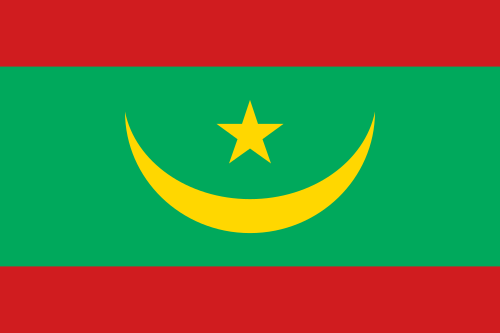
B2 République Islamique de Mauritanie - (sans paroles) 2'14
B3 République du Niger - La Nigerienne 1'46
B4 République Rwandaise - Rwanda Rwacu 1'09
B5 République du Sénégal - Pincez tous vos koras 1'32
B6 Sierra Léone - High We Exalt Thee 1'58
B7 République du Somalie - (sans paroles) 0'30
B8 République du Tchad - La Tchadienne 1'03
B9 République du Togo - Salut à toi pays de nos aïeux 0'54


Hunting for candidates for a possible Anthem for Luobaniya I also consulted this record, suffice it to say that in most cases it made me conscious of what I was not looking for and I am also very much aware that in some instances the memories invoked by a few of these Anthems will not instill the happy feeling of belonging and peaceful tranquility.

I have no intention to upset anyone, nor do I want to offend any ones feelings unnecessarily, so regard this as an historical document for your reference only.

To see the relevant flag for each nation current at the time of recording you can click on the nations name in the track listing and hopefully it will take you to an image of that flag.

Lastly I would also like to caution anyone whose nationalistic spirits soar too high, that it is a good assessment of any mans qualities, that which is said about the heart of the man of power, that rather than to gain glory from invading and conquering cities, it is indeed nobler to quench ones wrath and to still ones temper!

And as always, I hope you enjoy this, but within reason...


Saturday, April 9, 2011

Rwanda III - Musique de Danse rec. Jos Gansemans


Rwanda III - Musique de Danse - Dansmuziek
Recordings by Jos Gansemans 1973-1975
Alpha - 5025 - P.1977


Side A


A1a Imbyino - femmes - hora wararaye 3'20
A1b Imbyino - femmes - Kimbagira Nyamaraba 4'28
A2a Imbyino - filles - Amataba 3'12
A2b Imbyino - filles - Mabano 3'54

A3a Chant et danse nuptial 4'00
A4 Urwagitari 3'15


Side B


B1 Ikiniba 3'03
B2 Ikinyemera 3'32
B3 Intore 6'36
B4a Twa - danse Urubyiruko 2'32
B4b Twa - danse Igibuge 4'16
B4c Twa - danse Umuhamilizo 3'00


This is the third and last of the Rwanda series from Tervuren. For a review of all three volumes see previous post. Hope you enjoy. There will be some more LP's coming but may take a little while because they have much more voluminous annotations, each volume comes with a 40-80 pages book. They were all written in Flemish but have translations of the full text into English, French and German so the actual information is divided by four. The congolese volumes are especially worth waiting for in my opinion. Hope you also like these volumes as posting them here means rather a lot of editing work!


Ikinyemera dance.

Ikinimba dance.

Girls singing the Imbyiro.

Dancing Twa women.

Dance of imbyino women.

Poses of intore dancers.


Twa singer.


Music ▼ +

Friday, April 8, 2011

Rwanda II - Musique Vocale - P.1977


Rwanda II - Musique Vocale - Vokale Muziek
Recordings and documentation by Jos Gansemans

Alpha - 5024 - P.1977


Side A

A1a Chants pastoraux - amahamba - indama 4'35
A1b Chants pastoraux - kubangulira 3'00
A2a Chants de chasse - amahigi + thembe (à l'arc) 2'24
A2b Chants de chasse - amahigi + inzogera (à la lance) 2'27
A3a Chants de travail - kwidoga 3'18
A3b Chants de travail - amasare ubwato 2'24
A4 Chant cultuel - Nyagitansi 3'35


Side B

B1 Berceuse igihoso 3'00
B2 Berceuse + ubuhuha 2'22
B3 Poème dynastique igisigo 4'04
B4 Indilimbo z'ingabo 3'12
B5 Chant nocturne igitaramo 2'03
B6 Chants cultuel - Lyangombe aho rero 3'52
B6 Chants cultuel - Umuhara 2'03


Here is volume two of the Rwanda series from Tervuren. This like the other two comes with several pages of documentation about the recordings that were made by Jos Gansemans during the years 1973-1975.

Below is a review of all three volumes from Ethnomusicology January 1981
- vol. 25, No.01, pp 178-179
by Kazadi wa Mukuna. (beware of misspellings resulting from OCR)

Rwanda, Vol. I. Musique Instrumentale/Instrumentale Muziek (Musee Royale de l'Afrique
Centrale/Koninklijk Museum voor Midden-Afrika, Tervuren). One 12" 33 1/3 rpm disc. 1977.
Alpha 5023. Descriptive notes by Jos Gansemans in Flemish and French bound into slipcase, 6 pp., mus. ex.

Rwanda, Vol. II. Musique VocalelVokale Muziek (Musee Royale de 1'Afrique
Centrale/Koninklijk Museum voor Midden-Afrika, Tervuren). One 12" 33 1/3 rpm disc. 1977.
Alpha 5024. Stereo. Descriptive notes by Jos Gansemans in Flemish and French bound into slipcase, 6 pp., mus. ex.

Rwanda, Vol. III. Musique de Danse/Dansmuziek (Musee Royale de 1'Afrique
Centrale/Koninklijk Museum voor Midden-Afrika, Tervuren). One 12" 33 1/3 rpm disc. 1977.
Alpha 5025. Stereo. Descriptive notes by Jos Gansemans in Flemish and French bound into slipcase, 6 pp., mus. ex., photos.


In the past few decades, knowledge of the musical culture of the Banyarwanda (people of Rwanda) in the outside world was dominated by the sound of ingoma drum ensembles, the direct descendants of the royal drum ensembles of the Tutsi dynasty. Since the bulk of what is available on this musical culture is scattered in records devoted to African music in general or a large region of Africa, the release of these records will be more than welcome to music educators, students, and amateurs of Banyanvanda culture. The three albums in the set contain samples of music from three major repertoires: instrumental, vocal, and dance music, representing musical styles peculiar to the Banyanvanda as well as displaying their artistry on musical instruments (mbira, musical bow, drums) also common in other parts of Africa south of the Sahara.

Ethnographic notes on the Banyanvanda and their land are featured in the first record, devoted to instrumental music. These notes, perfunctorily written by Jos Gansemans in Flemish with French translation, provide no vital information
on the Banyarwanda or their culture, nor do they assist in relating the albums to their proper cultural context. One must turn to a description of each selection for valid historical, cultural, and musical information, some of which is supplemented by black-and-white photographs of the event.

RECORD REVIEWS

Record I, Side A opens with two selections of epic songs accompanied by inanga (board zither). an instrument whose zone of diffusion is limited to Rwanda. Another musical instrument used by Banyarwanda to accompany their epic songs is the mbira (thumb-piano), known to have been borrowed from Bakongo in Lower Zaire. The playing (Record I, Side A/5) resembles that of the Bakongo and the Luba of Zaire. characterized by the dampening of the keys with the index fingers after being plucked with the thumbs. Iningidi (a bowed monochord lute) is another borrowed instrument which has gained in importance in the north and center of the country, in spite of its recent anival in the culture. This instrument is also prominent in Uganda, where it is known by the same name. Side B contains predominantly the music of aerophones whose playing technique and overall expression are peculiar to this culture. The best example can be heard in Band 4 on ihembe (hunting horn). The last three bands (5, 6, and 7) represent three distinct styles of ingorzadrum ensembles from Rubungo, Rubavu-Gisenyi. and Mibilizi- Cyangugu regions.

In Africa. the Banyarwanda must be counted among those people whose musical cultures are dominated by unaccompanied vocal songs. This is revealed in Record II, devoted to vocal musical styles. Side A contains songs to accompany both solitary and communal work. In a culture where cattle-raising occupies a paramount position in the "cultural focus," the work-song repertoire is dominated by pastoral songs whose subject matter ranges from milking to praising cattles' lineage. Side B, on the other hand, contains cult songs, drinking songs, and lullabies. A unique feature of Banyarwanda vocal style is the lullaby accompaniment (BIZ), in which the singer produces a muted sound by letting the air through his loosely closed lips.

Record III contains music for four types of dances: dances performed by young girls at wedding ceremonies: warriors' dance: intore (dance of the chosen ones); and those of the Twa pygmies. Concerning field recording technique. some of the dance recordings (A/[. 2, 3) lack implicit noises. such as footsteps. In this case. recording technique (context, number and placement of microphones, etc.) is surely pertinent documentation for those interested in ethnomusicological method and training. Otherwise, Jos Gansemans is to be congratulated for a fine
technical production.

Michigan State University Kazadi wa Mukuna


Young woman accompanying herself on the wan intara singing the song Nyagitansi


Three women from Lyangombe with typical ritual hairdoes.


Singer of Amahamba.
Hunters With Spears Singing Songs Of The Hunt.

Men with painted faces during Umuhara.

Hunters with bow and arrow.

Handtechnique for Ubuhuha.


Music ▼ +